Drying flowers in silica gel without losing the colour

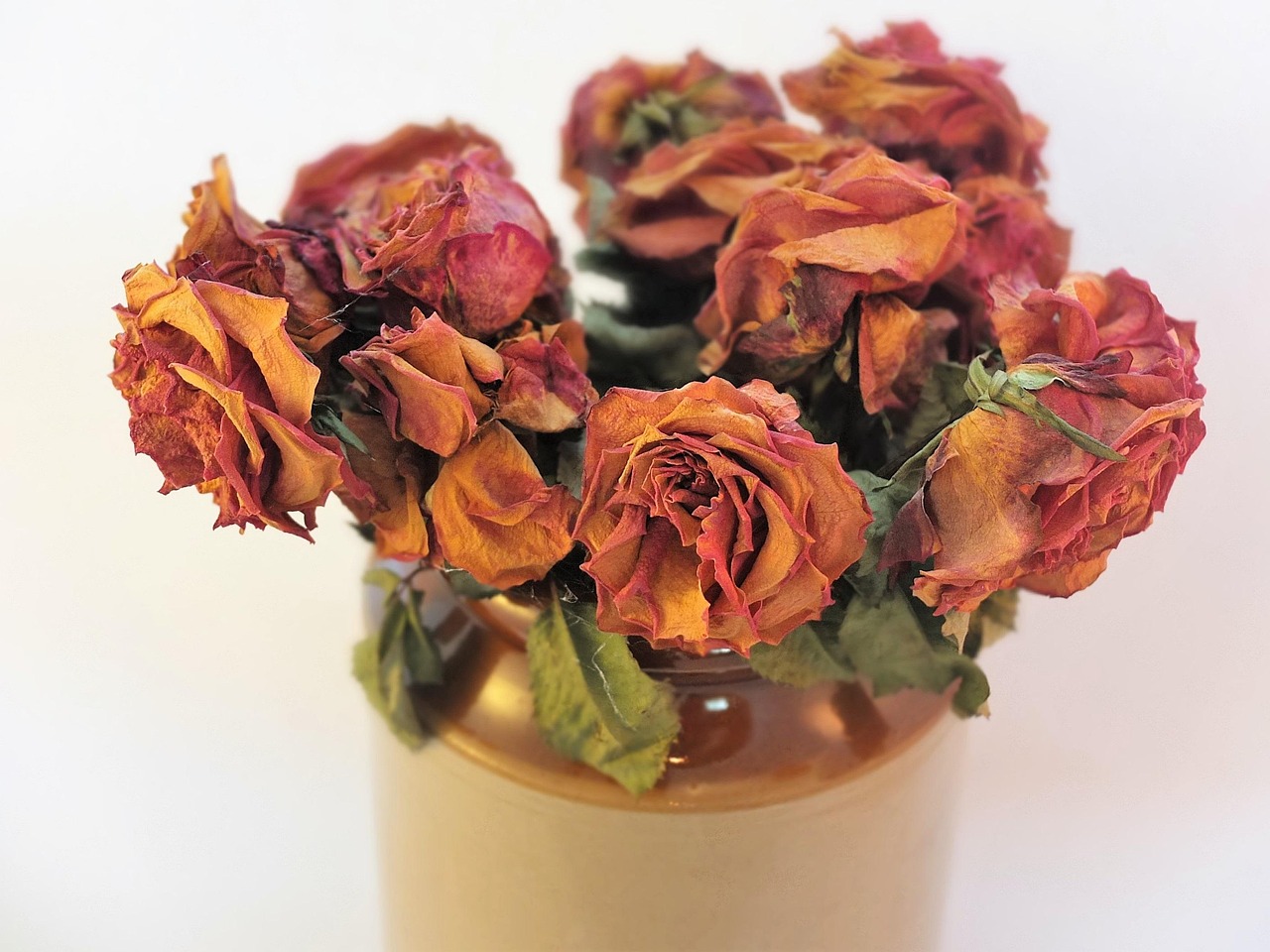
Silica gel is the least glamorous item we sell and the one that decides whether a preserved-flower project works. It is not a chemical treatment — it is a drying agent that pulls moisture out of the petal fast enough that the pigment does not have time to break down.
Speed is what protects the colour
Air drying takes one to three weeks, and in that time petals oxidise and go brown at the edges. Buried in crystals a rose is dry in two to four days, a marigold in about two, and a thick-headed flower such as a dahlia in five to seven. The faster the water leaves, the closer the finished flower stays to the shade it started at.
Burying it properly
- Cut the stem to about 2 cm — long stems will not sit level in the tub.
- Put a 2 cm bed of crystals down, set the flower face up, then pour crystals around the petals rather than on top of them.
- Fill until the flower is covered by roughly 1 cm and seal the tub. Do not shake it.
- Check at day two. Petals should feel like paper, not leather.
Reusing the crystals
Colour-indicating crystals turn from blue to pink, or from orange to green depending on the batch, once they are saturated. Spread them on a tray and dry them in an oven at a low temperature exactly as the instructions on your tub specify, then let them cool in the sealed tub. Kept sealed between projects, one tub outlasts several seasons of flowers.
Two safety points
Silica gel is a drying agent, not food, and belongs out of reach of children and pets. Do not use a kitchen container you also eat from, and keep the tub closed — crystals left open on a humid Bhopal afternoon are half spent by evening.